Trusted by over 700,000 professionals across 138 countries
Our digital rights management features
Control distribution of confidential documents
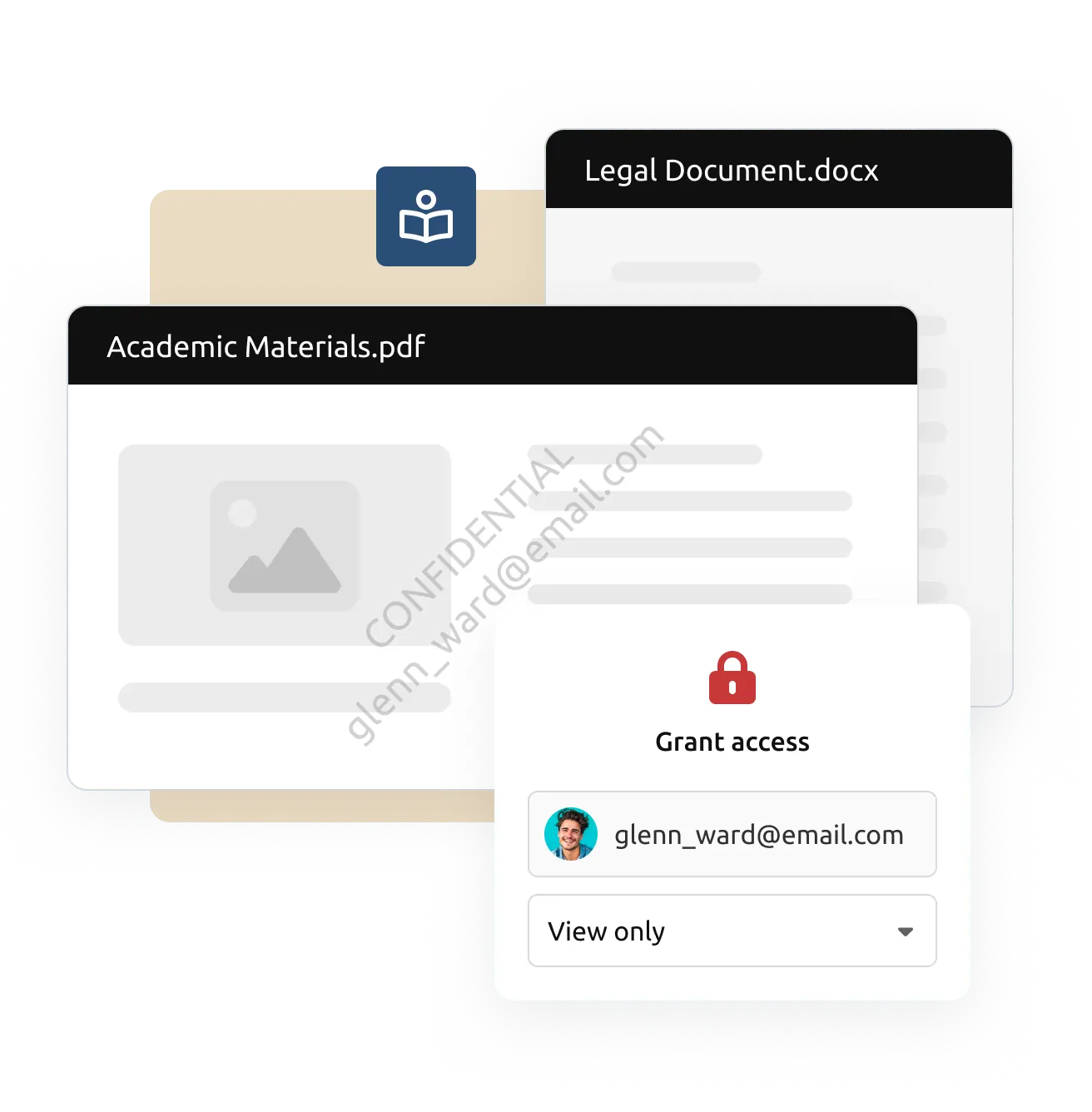
Prevent unauthorized sharing such as printing, copying, downloading, and enhance security with password protection for your sensitive documents.
Restrict and revoke access to your files
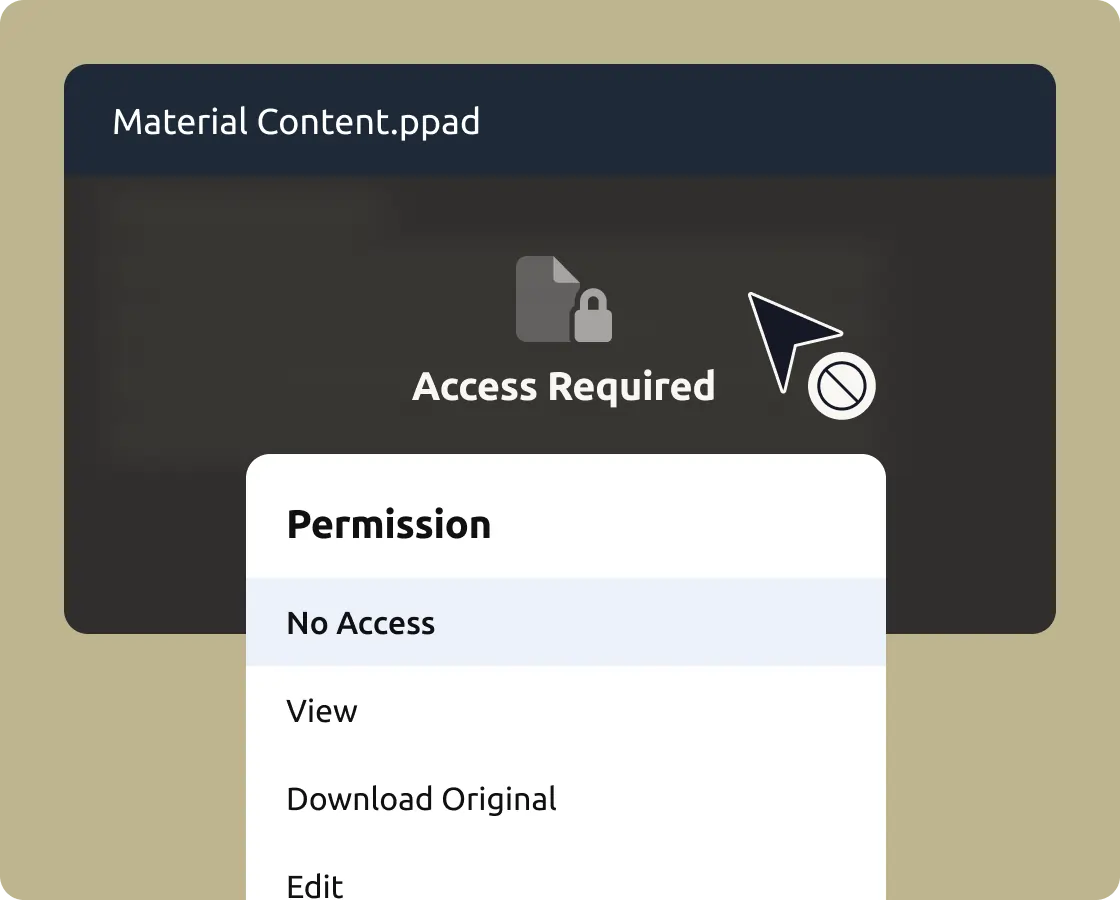
Control which users can access your documents and revoke the permissions anytime. You can also restrict forwarding and set expiration dates for access.
Track user activity with comprehensive analytics
Gain detailed insights into who viewed your files, their location, the duration and frequency of their views, and whether the files were printed or downloaded.
Automatically watermark important documents
With dynamic watermarking, you can automatically watermark sensitive documents with the recipient’s email address and other information on the fly.
Document expiry and expire after opening
Set rules to automatically expire document or PDF access after a specified number of views, prints, days, or on a fixed date.
Discourage screenshots of your sensitive documents
Reduce the viewable area of documents to discourage screenshots using Digify Screen Shield.
Persistent Protection After Download (PPAD)
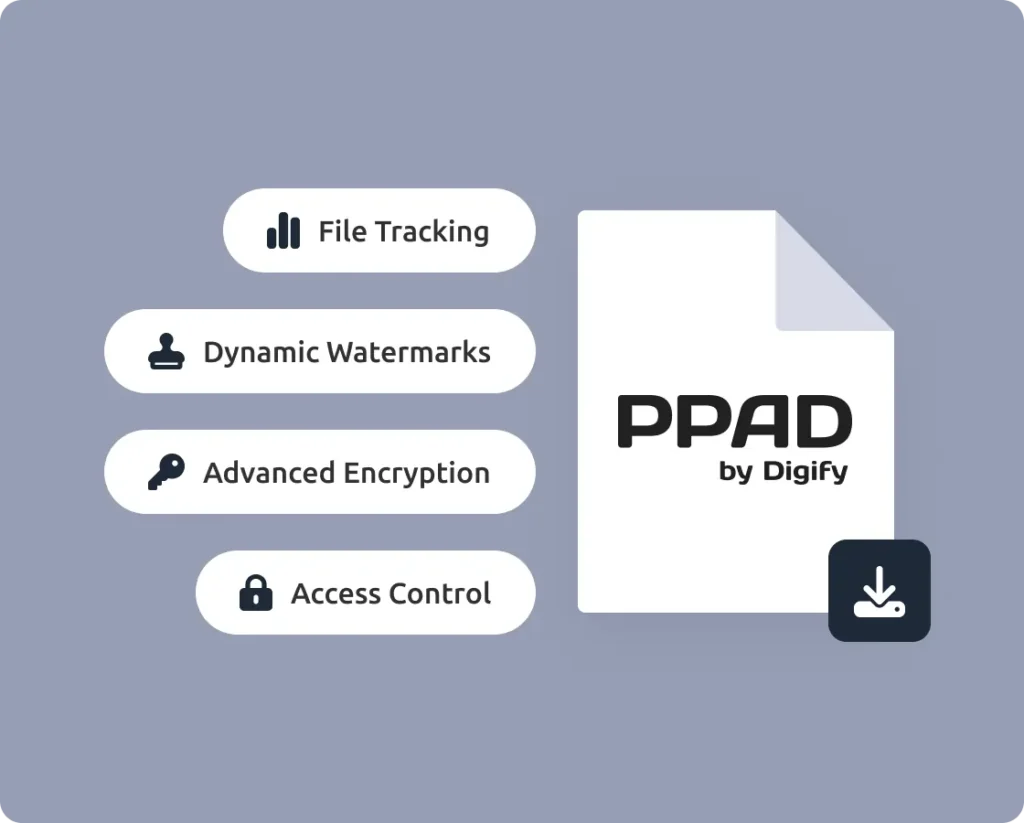
Keep control after download. PPAD encrypts files at the source and binds them to your viewing policies.
You can restrict forwarding, block printing, watermark by recipient, set expiry, revoke access, and track activity with a secure reader that works online or offline.
Digify is compliant with ISO 27001, the gold standard in information security management. Our hosting infrastructure is on Amazon Web Services, which is compliant with SOC 1 & 2, SAS70 Type II.
Securely hosted
Files are backed up with multiple redundant copies. Our infrastructure is protected by Web Application Firewalls. Automated scripts help to speed up protection against attacks.
Encrypted
All files are secured with envelope 256-bit AES encryption, which is certified for use by the NSA for top-secret information.
What is Digital Rights Management (DRM)?
Digital rights management (DRM) enables you to set and control copyright protection and data privacy for your intellectual property, such as market research, e-books, training materials, PDFs modules and reports. DRM protection enables you to prevent your digital files from unauthorized redistribution and restrict how your recipients can copy content.
DRM software includes security features for intellectual property protection, such as encryption, document tracking, access control, and the ability to set permissions to prevent screenshots, apply copy protection, and prevent download and print of your materials and PDFs.
Protect valuable documents
Common use cases for DRM include protection of e-books, training and course materials, and regulatory documents.
Multiple file formats supported
Protect PDF files, images, videos, audio files, and more with Digify’s integrated DRM solution.
Simple & easy-to-use
Get set up in minutes with the full suite of Digify’s document security features from one easy-to-use DRM solution.
“Digify is a simple yet secure tool that provided the necessary integration with the infrastructure we already use. This made picking and using Digify for our internal teams an obvious decision.”
Jonathan Agha
Former Head of Information Security WeWork
“The interface, access controls are all very intuitive. I am able to see granular level data on document access and review. It helps provides information for insights into how a diligence process is operating. The integration with Gmail is also very useful to regularly send secure emails without leaving the gmail interface.”
Arjun Sharma
Director, Legal Peak XV Partners
“We’ve been using Digify for the last year to help securely send private documents to external partners. Their product saved us a lot of time from having to build our own tool to securely share these documents. Their product is feature rich, they respond to customer feedback, and their support team is on top of things always open to creative solutions to unique problems.”
James Costa
Principal Product Manager Wrapbook
“Digify demonstrated it was the most innovative by highlighting a simple and inexpensive way to address a recurring challenge of controlling and protecting ideas and information.”
Hugh Thompson
CTO, Symantec Head Judge RSA Innovation Sandbox
“We use Digify to securely send sensitive documents as part of due diligence processes and security reviews. We like to keep our confidential documents close to the chest. With Digify, we are always in control of who has access and who doesn’t.”
Jonathan Dunlop
Formal General Counsel Vidyard
“We love that we can provide our prospective and active portfolio company with secure data rooms and also that we easily can use Digify to send confidential presentations with preset timeouts. Digify creates a simple way to give and to revoke access to individual documents as needed.”
Will Klippgen
Managing Partner & Co-founder Cocoon Capital
“We always use Digify to maintain a data room for investors so that sensitive information is still protected, even when it is sent externally. I’m very likely to recommend Digify for its ease of use and of course, the security.”
Jonathan E. Savoir
CEO & Co-founder Quincus
Digital rights management FAQs
Digital Rights Management (DRM) is a set of controls that govern who can open, copy, print or share a file. It enforces rules after download so documents cannot be freely forwarded or leaked.
Files are encrypted and tied to user identity. Access can be time limited, device limited, watermarked, and revoked at any time, even after download.
These are the supported file formats/types on Digify: